For business schools and corporate learning
Where learning is the consequence.
Decide. Simulate. say de-SIGH-sim
Live, multiplayer business simulations where the lesson is in the competition. Facilitators configure the concepts; participants read the market, outthink rivals, navigate uncertainty, and find out if what they know actually works.
Process Flow · Operating profit by team
+91 % average profit once teams reorganize around the station that held the line up
| Team | Run 1: Alone | Run 2: Random stations | Run 3: Reorganized |
|---|---|---|---|
| Team A | ₱2,450 | ₱1,520 | ₱4,420 |
| Team B | ₱2,780 | ₱2,310 | ₱3,880 |
| Team C | ₱2,120 | ₱1,180 | ₱3,360 |
| Team D | ₱2,610 | ₱2,940 | ₱2,880 |
| Team E | ₱1,940 | ₱860 | ₱2,310 |
What makes a DECISIM session
Every simulation shares the same signature.
-
Multiplayer
Participants play with and against each other. What one person decides changes what the others can do.
-
Real-time
The session runs live, on a shared clock. Hesitation costs, and timing matters as much as the choice.
-
Dynamic
Every decision changes the situation the next one is made in. Nothing resets between moves.
-
Competitive
Teams compete on the same problem, so a good result is measured against what rivals managed.
-
Experiential
The lesson comes from what the class did, not from a lecture: the debrief is built from the session itself.
-
Progressive disclosure
Each round adds one thing to notice or decide, so participants discover the idea before anyone names it.
How a session works
Every DECISIM session follows the same arc, whatever the simulation: prepare, decide against rivals, then examine what happened.
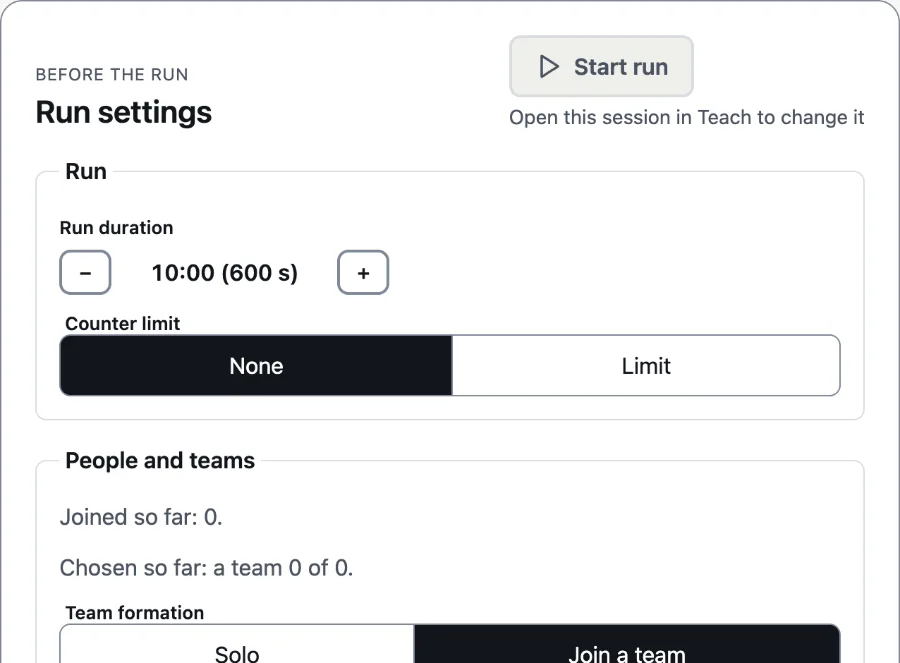
- Step 1
Facilitators configure the concepts
Choose the timing and teams, then rehearse with bots in every seat before class.
Example — illustrative figures
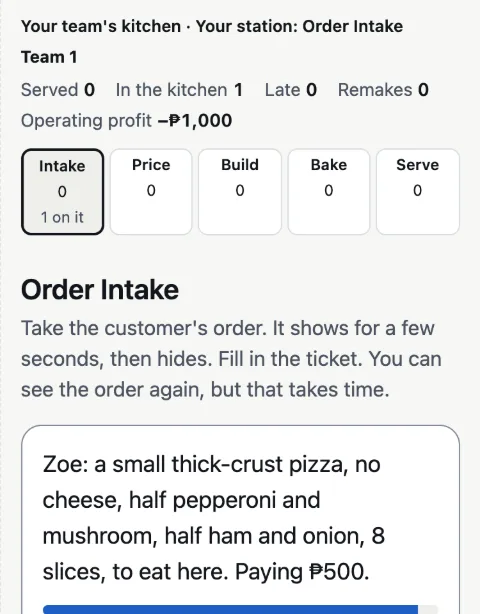
- Step 2
Participants decide against rivals
Participants join from their own phones with a join code — no account, no app — then read the market and commit their decisions.
Example — illustrative figures
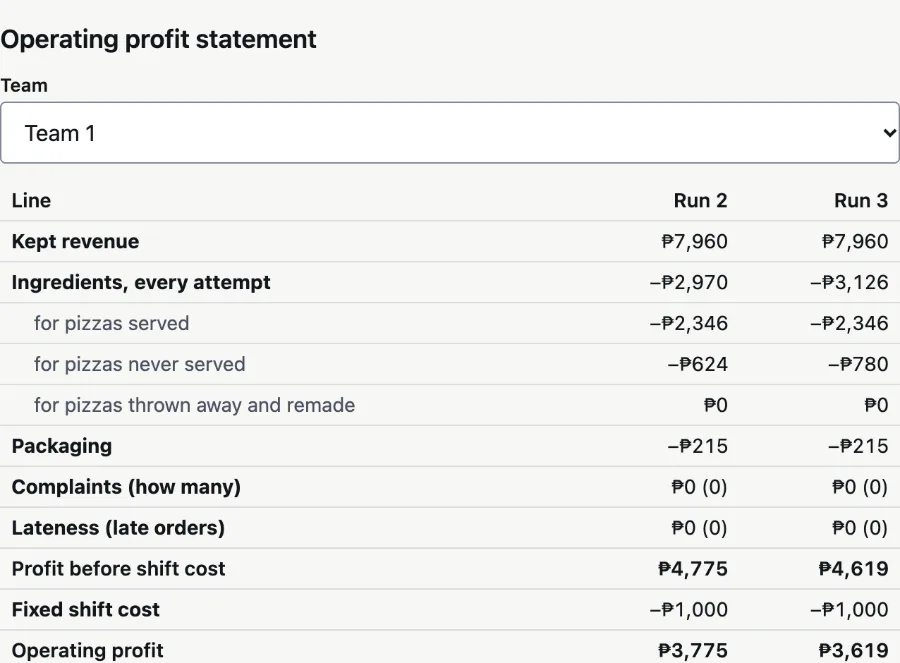
- Step 3
The debrief reveals what worked
When play ends, the facilitator walks the class through what happened and reveals what was hidden during play.
Example — illustrative figures
Sample simulations
Each simulation is built around one management problem. Ask to evaluate one for your programme.
-
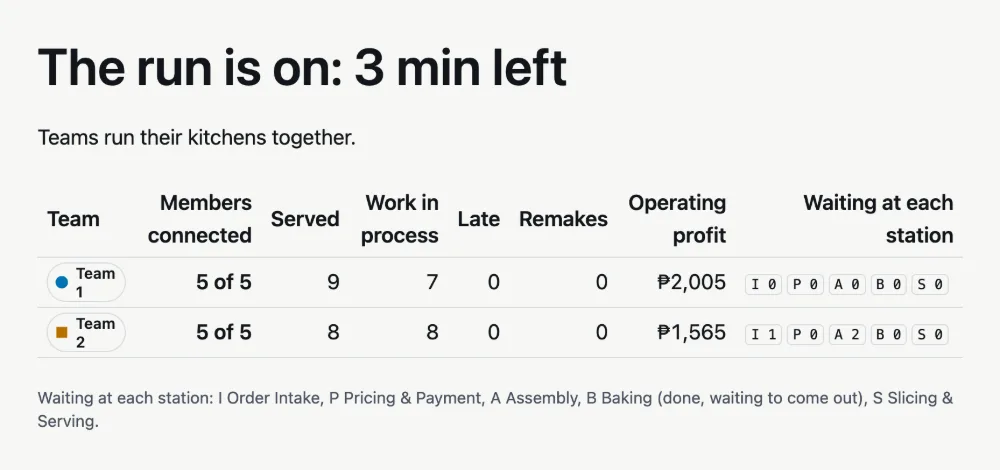
Teams run a five-station pizza shop. They first run it alone, then as a line, find what holds the line up, reorganize, and compete on operating profit.
- Domain
- Operations Management · Process Design & Flow
- Participants
- 5+
- Play time
- 10 mins+
-
CityRush Beta
Teams run rival delivery platforms competing for the same customers and riders across a city. They read their own data to find what happened and why, then decide where riders and promotions go.
- Domain
- Operations Management · Platform Marketplaces
- Participants
- 3+
- Play time
- 10 mins+
-
Interlock Beta
Organizations win opportunities only by assembling what other people hold, when those people want different things and the work depends on one another.
- Domain
- Organizational Dynamics & Design · Coordination & Interdependence
- Participants
- 5+
- Play time
- 10 mins+
-
Org Chart Beta
Resources move only along who can reach whom. Participants find that slow replies come from position and load, and that the organization had enough: it sat in the wrong place.
- Domain
- Organizational Dynamics & Design · Organizational Structure
- Participants
- 5+
- Play time
- 10 mins+
Where DECISIM fits
Business schools
Course sessions and executive workshops where a simulation is the experiential core of a topic, followed by a debrief grounded in what the class actually did.
DECISIM for business schoolsCorporate learning
Leadership and management programmes where teams practise judgment together, then examine what their choices set in motion.
DECISIM for corporate learningThe facilitator stays in control
-
Rehearse before class
Run a dry run with bots in every seat and see exactly what participants and the debrief will show.
-
Pause at any moment
Pause, announcements and advancing the simulation take effect for everyone at once, and you see that they did.
-
Decisions that clearly count
Participants see a decision as accepted only once it has been recorded, and they are told whether they can still change it.
-
Hidden stays hidden
Each participant sees only what their role allows. Information hidden during play is revealed in the debrief, when you choose.
-
A debrief built from what happened
When play ends, the debrief draws on the session itself: the decisions, the consequences and the moments things turned.
Considering DECISIM for a programme?
Tell us about your programme and your cohort, and we will be in touch to discuss an evaluation.
Request an evaluation